
Building a Weekly OnlyFans Subscription Review Routine
OnlyFans subscriptions renew quietly in the background, which is why a weekly review beats waiting for a monthly statement. A short weekly check-in turns that silence into a repeatable habit: you look at every active page once a week, confirm renewal dates, note price changes, and decide whether each subscription still earns its place. This guide covers the mechanics of that routine, from calendar alerts to spend logging, and shows how a ranking site such as BestOnlyFans can work as a cross-reference rather than a shopping list.
The method here is deliberately small. Instead of an annual overhaul of your spending, you run a five-to-ten minute audit every week.
Why Weekly Beats Monthly for Subscription Tracking
OnlyFans billing is simple on the surface: a subscription starts when you pay, and it renews automatically at the end of each period unless you cancel or the creator changes something that interrupts auto-renew. The complexity comes from volume. Ten subscriptions with staggered renewal dates create ten separate charge events per month, and each one can change price or shift to a promotional rate without an email you will notice.
| Review Frequency | Typical Issues Caught | Average Response Time |
|---|---|---|
| Weekly | Price changes, promotional roll-offs, duplicate subscriptions | 1-7 days before the next charge |
| Monthly | Renewal overlaps, accumulated PPV totals, lapsed-interest pages | Up to 30 days after a charge posts |
| Quarterly | Overall budget drift, long-term value decline, forgotten subscriptions | 60-90 days after the pattern started |
Posting schedules fluctuate, PPV messages arrive in bursts, and promotional pricing tends to appear at the start of a month. A monthly review catches these only after several charges have already processed.
Tip: schedule your weekly review for the same weekday each time, ideally two to three days before your largest cluster of renewal dates. That buffer is what turns a review into a decision window instead of a regret log.
Setting Up Your Review Calendar and Alerts
A calendar entry for the review itself plus individual alerts for each renewal date gives you two layers: one to prompt the audit, one to catch a specific charge if you skip the audit.
- Create a recurring calendar event for the weekly review, set to repeat every seven days with a 15-minute block.
- For each active subscription, add an all-day calendar entry two days before its renewal date, labelled with the handle and current price.
- Add a second reminder 24 hours before each renewal for any subscription costing $15 or more.
- Set a monthly phone reminder to confirm your calendar entries still match your active subscriptions.
- Keep a plain spreadsheet with four columns: handle, price, renewal date, and a note on the last piece of content you used.
The spreadsheet does not need formulas. If four subscriptions renew in the same week, that is a cash flow problem you can solve in advance by cancelling one before the cluster rather than after.
Auditing Active Subscriptions for Value
Value here is personal and does not require anyone else’s opinion, but it does require consistent criteria so the decision is not just mood.
- No new posts since your previous weekly review.
- Posting frequency dropped noticeably compared with the first month you subscribed.
- PPV messages now arrive more often than regular feed posts.
- Recent PPV content felt thinner than earlier purchases at the same price.
- Engagement in comments or messages has slowed on the page.
- You have not opened the page in the past two weeks outside of your review.
- The current base price no longer matches the volume of content you receive.
One or two flags is usually a normal quiet stretch, especially if the creator posts in cycles rather than daily.
PPV frequency deserves its own line in your notes because it changes the true cost of a subscription. A page charging $4.99 with frequent messages priced at $3 to $5 each can cost more per month than a $15 page with no PPV at all.
Cross-Referencing BestOnlyFans Data During Reviews
Ranking sites exist because OnlyFans has no built-in discovery feed or directory. That gap is where BestOnlyFans fits into this routine: not as a source of new subscriptions, but as a reference point for the pages you already pay for.
- Compare the listed current price against what your account is actually being charged.
- Check the recent activity indicator against your own observation of posting frequency.
- Review any price history shown to see whether a recent increase lines up with your own charge change.
- Note the category listed and confirm it still matches what the page publishes now.
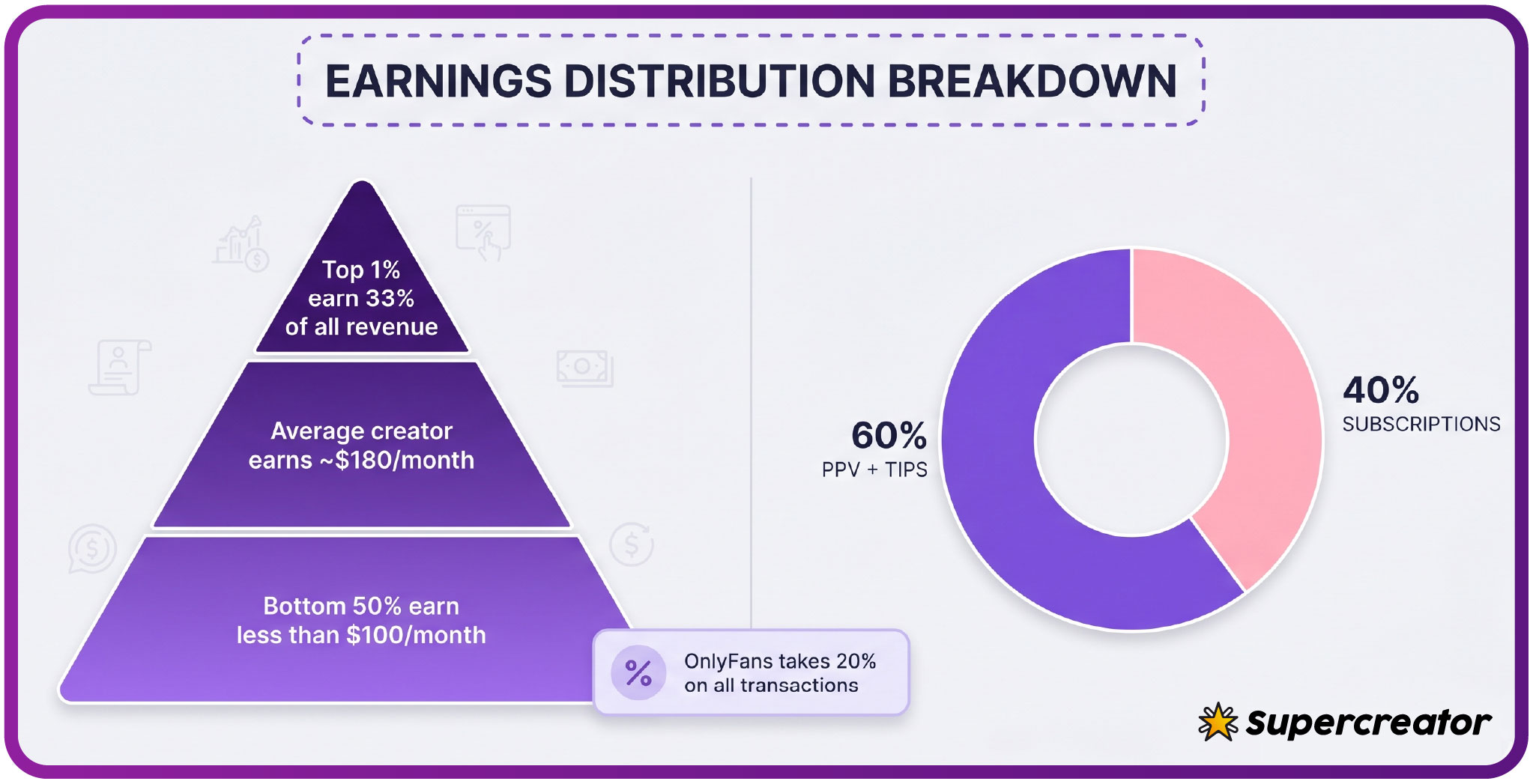
OnlyFans takes a 20% fee on everything and the creator keeps 80%, so a page’s revenue depends heavily on subscriber retention and PPV volume. A creator who stops posting is usually losing income, which means activity signals tend to move before price signals do.
Treat discrepancies as questions, not conclusions. If a ranking card lists a price you are not being charged, the likely explanation is a promotional first month. Much of the comparison in these guides is framed as bestonlyfans vs other ranking approaches, and the practical takeaway is the same: use third-party data to verify, then trust your own billing history.
Handling Price Changes and Auto-Renew Stops
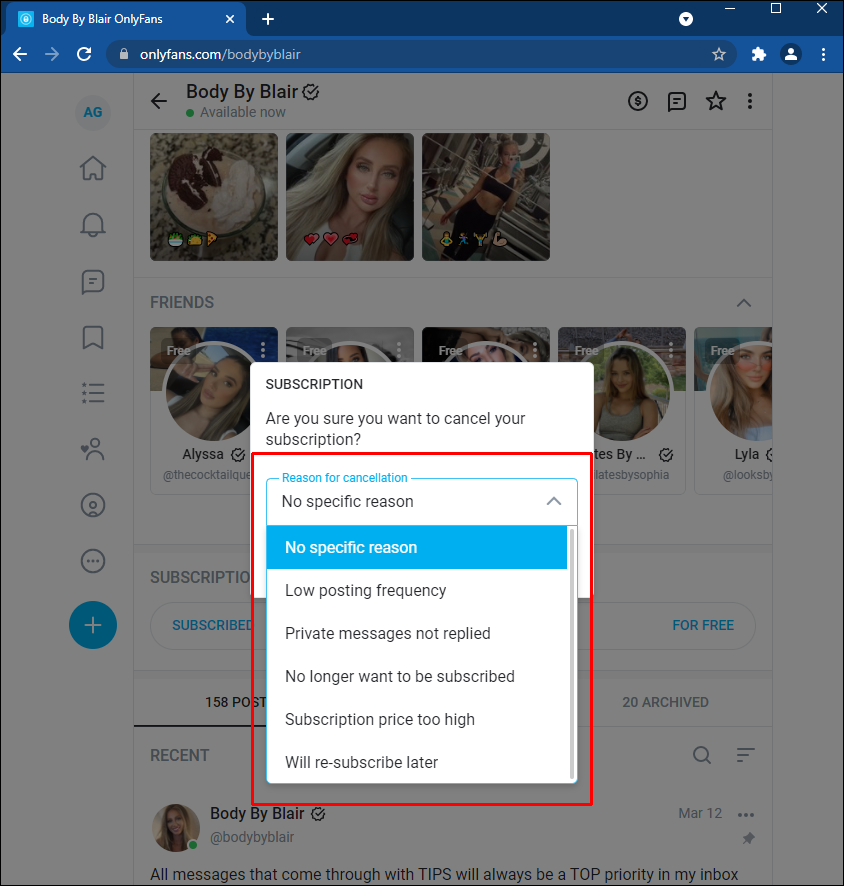
A price increase from a creator stops auto-renew rather than charging you the new rate silently. Your access continues until the paid period ends, but no new charge is scheduled unless you actively resubscribe.
- Price increase with auto-renew cancelled: access runs to the end of the current paid period, then stops unless you resubscribe.
- Promotional first month ending: the subscription moves to the standard base price and renews at that rate.
- Creator pauses the page: renewals stop and remaining access typically ends with the period.
- You cancel manually: access continues until the paid period expires, with no further charges.
- Payment method fails at renewal: the subscription lapses and may need to be restarted from scratch.
A free page sets the price to $0 and earns through PPV messages and tips rather than subscriptions, so there is no renewal date to monitor. Your weekly review should still log PPV spending on free pages, because that cost is invisible in a standard subscription list.
A card verification hold of $0.10 may appear when you add a payment method; it is refunded within days and is not a subscription charge.
Adjusting Your Budget Mid-Cycle
When a price change, a promotional roll-off, or an unexpected PPV purchase shifts your numbers, you have days rather than weeks to rebalance. The goal is to keep total spending inside the limit you set at the start of the month.
- Total what you have already spent this month across subscriptions, PPV unlocks, and tips.
- Subtract that figure from your monthly cap to see what remains.
- List every renewal still scheduled before the month ends, with prices.
- If scheduled renewals exceed the remaining amount, rank subscriptions by how much you used them in the past two weeks.
- Cancel or pause the lowest-ranked subscription before its renewal date, not after.
- Move the freed amount to a buffer for PPV and tips, or leave it unspent.
Two pricing details make this easier. Paid subscriptions range from $4.99 at minimum to $49.99 at maximum, though most cluster between $5 and $10, so a single cancellation frees a modest amount rather than a large one. PPV messages can unlock up to $50 each, which means one impulse purchase can outweigh several subscription cancellations.
A mid-cycle check also protects against the kind of payment fraud that targets recurring billing. Learning how to recognize and avoid phishing scams is worth the ten minutes, because a fake renewal notice is one of the most common ways card details get exposed.
Documenting Patterns to Predict Future Spending
After six to eight weeks of weekly entries, your spreadsheet stops being a log and starts being a dataset. Patterns emerge that are invisible in any single month: which creators you actually keep, how often you buy PPV, and whether spending rises around specific times.
| Data Point | What It Reveals | Budget Impact |
|---|---|---|
| PPV spend per creator | Which pages cost more in unlocks than in subscription price | Often the largest hidden line item |
| Renewal clustering | How many charges land in the same seven-day window | Creates cash flow spikes you can smooth in advance |
| Promotional pricing timing | When discount months appear and when they roll off | Explains sudden increases that look like price hikes |
| Subscription lifespan | How long you typically stay subscribed to one page | Helps forecast how many active subscriptions you carry |

Security belongs in the same routine. Turn on two-step authentication in account settings and confirm it monthly alongside checking that your payment methods are current. That discipline mirrors the standard guidance for two-step authentication on any paid platform.
Keep the log small enough to maintain. Four columns and a verdict is enough for most subscribers; adding more detail than you will actually fill in each week defeats the purpose.
FAQ
How early should I set renewal alerts before an OnlyFans charge date?
Two days before is a practical default for most subscriptions, with 24 hours as the final reminder. If a renewal costs $15 or more, add an extra alert four days out so you have time to evaluate whether to keep it.
What should I do if the ranking site shows a price I am not being charged?
Check your own billing history first. The most common explanation is a promotional first month, which can sit below the standard $4.99 minimum while the base price stays higher. If your charge differs from both the listed price and any promotion you agreed to, contact support with your receipt details.
Can I reactivate auto-renew after a creator price increase stops it?
Your previous access ends at the close of the paid period you already funded, so you can decide at your own pace. Many subscribers use the gap to compare the new price against their own usage before committing again.
How do I track PPV spending that does not appear in standard subscription receipts?
PPV unlocks and tips appear as separate line items rather than as part of a subscription charge. Log them manually in the same spreadsheet during each weekly review, pulling amounts from your payment history. This is the only reliable way to see the true monthly cost of a page.